
What to Expect When You Need a Process Server in Colorado Springs

Here’s What You Need to Know No licensing drama: Colorado doesn’t make process servers jump through hoops, but that means you really need to choose carefully Basic requirements: They’ve got to be 18+ and can’t be your friend or family member who’s involved in the case Different ways to get it done: Handing papers directly works best, but there are backup plans when people try to hide What you’ll pay: Budget around $110-$250 depending on how fast you need it and how hard the person is to track down Why pros matter: They’ve seen every trick people try and know how to handle sticky situations Timeline reality: A few days is pretty normal, but you can pay extra for rush service when you’re in a jam Paperwork is everything: Mess up the documentation, and your case could get thrown out – seriously So you need someone served with legal papers in Colorado Springs. Fun times, right? Whether you’re dealing with a messy divorce, trying to kick out a problem tenant, or stuck in some business drama, you’ve probably never had to think about process servers before. Now here you are, probably Googling at 2 AM trying to figure out what the heck you’re supposed to do. Take a deep breath. It really isn’t as scary as it seems, and I’m going to walk you through everything without all that legal mumbo-jumbo that makes your brain hurt. Colorado Keeps Things Pretty Simple (Maybe Too Simple) Here’s the thing about Colorado – we’re pretty laid back when it comes to process server requirements. While other states make people get special licenses and jump through all kinds of regulatory hoops, Colorado basically says “if you’re 18 and not mixed up in the case, go for it.” Sounds awesome, right? Well, yes and no. The good news is there’s no bureaucratic nonsense slowing things down. The not-so-good news? Pretty much any random person can hang out a shingle and call themselves a process server. Your teenager could technically do it. So could that sketchy guy from Facebook Marketplace offering to do it for twenty bucks. But here’s what I’ve learned after being in this business for years – just because someone can serve papers doesn’t mean they know what they’re doing. The person you pick better understand how local courts work, know how to fill out those affidavits properly, and have some real experience dealing with people who really, really don’t want to be served. I’ve seen cases get tossed out because someone’s cousin volunteered to serve papers and completely screwed up the paperwork. Don’t be that person. Your legal case is way too important to trust to someone who watched a YouTube video and thinks they’re ready to roll. What Kind of Papers Are We Talking About Here? Process servers around Colorado Springs deal with all sorts of stuff, and trust me, we’ve seen it all. Divorce papers are probably our bread and butter – and man, do those get interesting sometimes. Nobody’s exactly thrilled to get divorce documents, and some folks get pretty creative trying to dodge them. Eviction notices are huge too, especially with Colorado Springs growing like crazy. Rent keeps going up, people are struggling to keep up, and sometimes landlords have to start formal proceedings. The thing with evictions is they’re super time-sensitive. Mess up the service, and you’re looking at weeks or months of delays while your problem tenant keeps living there rent-free. Then there’s all the business drama. Partnership disputes, contract fights, debt collection – when companies can’t play nice, someone’s got to serve the papers. These can get tricky because you need to find the right person at a business who’s actually allowed to accept legal documents. It’s not always the person at the front desk. Subpoenas keep us plenty busy too. Maybe you need someone to show up in court, or you need documents for your case. Getting subpoenas served right is super important – mess it up and your star witness might not show up when you need them most. The point is, every type of document has its own quirks and challenges. What works for serving your ex might not work at all for serving XYZ Corporation. Experience really counts for a lot in this game. How This Actually Works in the Real World Colorado gives you a few different ways to get papers served, and honestly, it’s pretty flexible compared to some states I’ve dealt with. The gold standard is personal service – walking up to someone and handing them the papers face-to-face. It’s clean, it’s simple, and it’s really hard for anyone to claim they didn’t get served. But life isn’t always that cooperative, especially when people see you coming and suddenly remember they need to be literally anywhere else. Sometimes you’ll need to get creative with court approval. Certified mail, newspaper publication, even taping stuff to someone’s door in some cases. These are usually your last-resort options when someone’s really committed to playing hide-and-seek, but they’re there when you need them. A good process server has dealt with every excuse, every dodge move, and every “creative” attempt to avoid service you can possibly imagine. They know when to be patient, when to keep pushing, and when to try something completely different. Let’s Talk Money (Because I Know You’re Wondering) Okay, the question everyone really wants answered – what’s this going to cost you? Around Colorado Springs, you’re looking at anywhere from about $45 to $145, depending on a bunch of different factors. For basic, no-rush service where the person lives in a normal neighborhood and isn’t actively trying to hide from you, figure around $110-$250. Need it done yesterday because you’re up against some court deadline? That’s going to run you $200-$350 or more. Same-day service costs even more, assuming it’s even possible. Where the person lives matters too. Serving someone downtown is one thing. Trying to track down someone in a cabin way up in the mountains? That’s
Cracking the Case of the Gilgo Beach Murders: How the Long Island Serial Killer was Caught, and What it Teaches Us About Private Investigators

Beginning in the early 90s, a killer haunted Long Island. Known as the Long Island Serial Killer, or the Gilgo Beach Killer, the ghost avoided capture for decades, until the discovery of four burlap-wrapped bodies changed everything. When Rex Heuermann was arrested in 2023, it marked the culmination of years of intense investigative work, where detectives would go to enormous lengths in order to find the right man. Here at Tracked N’ Solved Investigation Agency, this case was of particular interest to us, not just because of how well-known it was, but because it proved that thorough investigative work, advanced technology, and persistence over the years can close cold cases that previously had seemed hopeless. Important Facts: Rex Heurermann was charged with killing seven women, but it’s suspected he had other victims who have yet to be identified or conclusively linked with Heuermann. He is in custody, but has not stood trial yet. Heuermann’s first suspected victim was Sandra Costilla, killed in 1993, and his last suspected victim was Amber Lynn Costello, killed in 2010. An architect in Long Island, Rex Heuremann, was arrested in 2023 after a lengthy investigation. Two of Heuermann’s potential victims were identified in April of 2025, leaving only one unknown victim, “Asian Doe”. What Were the Gilgo Beach Murders? For decades, along a long, lonely stretch of road near Gilgo Beach, the remains of multiple women, one child, and one man lay, waiting to be found. Their bodies had been dumped less than 35 feet away from the edge of Ocean Parkway, all within just a few miles of each other. In December 2010, Office John Mallia and his cadaver dog Blue were searching for Shannan Gilbert near the shoulder of Ocean Parkway when the German Shepard hit on a scent–it was the skeletonized, burlap-wrapped remains of Melissa Barthelemy. That discovery would open the floodgates that would eventually lead to the arrest of the Gilgo Beach killer. Between 2010 and 2011, 11 sets of remains were found along or near Ocean Parkway. Most of them were women who had offered their services as escorts online, a type of work that left them particularly vulnerable. Who Were the Victims in the Long Island Serial Killer Case? A total of eleven sets of remains have been found near Gilgo Beach that are thought to be related to Rex Heuermann, and as of April 2025, all but one of them have been identified. Heuermann has only been charged with seven of the murders, but there’s a chance he could be charged with the deaths of the other four at a later date. Sandra Costilla The earliest possible victim of Heuermann, Sandra Costilla, went missing in 1993 and was found a few days later by two hunters. Her body had been dumped in a forested area of North Sea, Long Island, New York. The 28-year-old woman had come to the United States from Trinidad and Tobago. When she was found, Costilla had been strangled, and her clothes were in tatters. Costilla’s fingerprints had been taken by police a year earlier when she was arrested for hopping a subway turnstile, and authorities were able to use those fingerprints to identify her after her death. The Gilgo Four In December 2010, four bodies would be found within a matter of days, and they would become known as “The Gilgo Four.” These women were Megan Waterman, Melissa Barthelemy, Amber Lynn Costello, and Maureen Brainard-Barnes. Melissa Barthelemy The first of the Gilgo Four to be found was 24-year-old Melissa Barthelemy. Melissa was found while authorities were using cadaver dogs to search for Shannan Gilbert, a woman who had gone missing nearby. Like several of Heuermann’s possible victims, Melissa was an escort on Craigslist. Melissa initially went missing on July 12, 2009. Over the following five weeks, Melissa’s younger sister would receive a series of disturbing calls about Melissa, even telling her that Melissa was dead, and that the caller was watching her rot. The calls were traced, but police weren’t able to identify the caller. Megan Waterman Originally from Maine, Megan Waterman was reported missing on June 6, 2010, when she didn’t call to check in on her daughter, whom she had left with family. Waterman was being sex trafficked by her boyfriend and was forced to work as an escort on Craigslist. She was living in a motel 15 miles from Gilgo Beach when she went missing, and her body was found when police returned to search the site where Melissa Barthelemy’s body had been found a day prior. Amber Lynn Costello On September 2, 2010, Amber Lynn Costello was reported missing by her family, but she had likely been missing for longer. Her family wasn’t immediately suspicious when she stopped responding to calls and texts, since they believed she was living in a drug rehabilitation center. Costello had gone to meet a client who offered her $2500 the night she went missing, and her roommate was able to give police a description of the client’s vehicle–a green Chevrolet Avalanche. This vehicle description would later become a key piece of evidence. Maureen Brainard-Barnes Facing eviction, Maureen Brainard-Barnes went to meet a client who contacted her on Craigslist about her escort services. Barnes had tried to pull back from sex work, but found that she didn’t make enough as a telemarketer to pay all her bills. She was reported missing on July 9, 2007. Like Barthelemy’s sister, a friend of Barnes received a chilling phone call after her disappearance, but when the friend demanded the caller call back on an unblocked number, they ended the call, and she never heard from them again. Valerie Mack Outside of the Gilgo Four, six other bodies were found. Valerie Mack, who also went by Melissa Taylor, went missing in November while doing escort work. Her torso was found on November 19, 2000, in Manorville, New York. Ten years later, in May 2020, her head, right foot, and hands were found in a separate location. Jessica
How Private Investigators Find Missing Persons
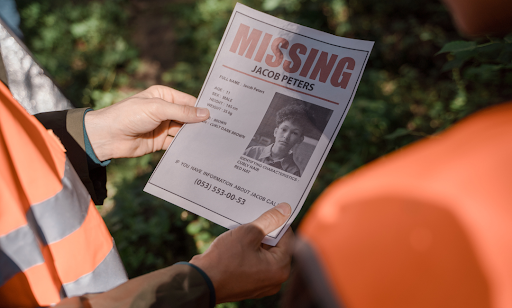
Every 40 seconds, someone goes missing in America. That’s over 600,000 people yearly — and police departments solve less than half these cases due to limited resources and strict protocols. When time matters most, private investigators step in where law enforcement leaves off. We use methods police can’t always employ, work cases they’ve shelved, and give families the dedicated attention their loved ones deserve. What you’ll learn: Why police missing person cases often stall How PIs legally access information police can’t Real techniques PIs use to track missing people When to hire a PI vs. waiting for police Cost breakdown and success rates At Tracked N’ Solved, we’ve reunited families across Idaho and beyond for over a decade. Our ex-law enforcement team knows both sides of missing person cases — and exactly how to bridge the gap when official channels fall short. Why Police Missing Person Cases Often Stall Police departments are overwhelmed. The average detective juggles 15-20 active cases at once, and missing persons often take a backseat to violent crimes and emergencies. Here’s what really happens when you file a missing person report: The 24-48 Hour Wait Most departments still enforce waiting periods for adults. By the time they start investigating, critical evidence has already vanished. Witnesses forget details. Security footage gets overwritten. Digital trails go cold. Resource Allocation Reality Police prioritize cases based on risk factors: Children and elderly? High priority Adults with no signs of foul play? Bottom of the stack History of leaving before? Even lower Your loved one becomes a case number competing for attention. Jurisdictional Handcuffs Did they cross state lines? Now you’re dealing with multiple departments that barely communicate. International? Good luck. Police need warrants, formal requests, and bureaucratic approvals that take weeks — time you don’t have. The “Voluntary Missing” Problem Adults have the legal right to disappear. Unless there’s evidence of a crime, police often classify cases as “voluntary missing” and scale back efforts. They’ll enter the person into databases but won’t actively search. Meanwhile, every hour counts. Phone records expire, bank transactions pile up unnoticed, and that last known location becomes less relevant. You need someone who can start now — not after the red tape clears. How PIs Access Information Police Can’t Private investigators operate in a legal sweet spot. We follow the same laws as everyone else — but without the restrictions that tie police hands. No Warrant? No Problem Police need probable cause and a judge’s signature to access most information. PIs? We work differently: Public records — instant access to property, court, and business filings Social media — no department approval needed to search profiles Witnesses — we talk to them informally, no Miranda rights required Subscription databases — tools police departments can’t afford The average police department waits 7-10 days for a basic records request. We get the same information in hours. The Power of Private Databases We invest in specialized tools that aggregate billions of data points: Database Type What It Reveals Speed Skip Tracing Software Address history, relatives, associates Real-time Cell Tower Data* Location patterns, travel routes 24 hours Financial Headers Asset locations, hidden accounts Same day Vehicle Tracking Registration changes, parking violations Instant *With account holder consent At Tracked N’ Solved, we maintain subscriptions to all major databases — an investment most smaller firms can’t match. Our skip tracing services alone have located missing persons across Idaho, Washington, and even internationally when police databases came up empty. Working the Gray Areas Police follow strict evidence rules that slow everything down. PIs move faster because we: Interview witnesses before memories fade (no 72-hour wait) Cross state lines without jurisdictional delays Use pretexting legally in Idaho to locate missing persons Access security footage before the 30-day auto-delete While police wait weeks for subpoenas, we help families request bank records directly. Phone records? Same day with the account holder’s consent. The difference isn’t breaking laws — it’s knowing which doors open without warrants and having the resources to walk through them immediately. Real Techniques PIs Use to Track Missing Child or Adult Finding someone who doesn’t want to be found — or can’t call for help — takes more than Google searches. We use proven techniques that combine technology, psychology, and boots-on-the-ground investigation. Digital Footprint Analysis Everyone leaves digital breadcrumbs. We start with the obvious — Facebook, Instagram, LinkedIn — then dig deeper: Gaming platforms (Xbox Live, Steam, Discord) Dating apps with location features Venmo/Cash App public transaction histories Spotify activity showing last played songs Fitness apps like Strava revealing running routes Financial Pattern Tracking Money leaves trails. With family permission, we analyze: Transaction Type What It Reveals ATM withdrawals Current location, movement patterns Credit card use Hotels, gas stations, favorite stores Subscription charges Gym memberships, streaming services Auto-payments Storage units, PO boxes Pro tip: Recurring charges often reveal hideouts. That $39 monthly storage unit fee? Could be where they’re staying. Vehicle Intelligence Cars are harder to hide than people. Our surveillance team uses: License plate recognition cameras at key intersections Parking violation databases Toll road records Repo and towing company networks Gas station security footage along likely routes We’ve tracked vehicles through three states using nothing but parking tickets and toll records. Human Intelligence (HUMINT) Technology only gets you so far. Real breakthroughs come from talking to the right people: Inner circle interviews — best friends know secrets family doesn’t Workplace contacts — coworkers notice behavior changes first Local business canvassing — gas stations, motels, diners Online community infiltration — hobby groups, forums, game servers Our investigators build trust quickly. People tell us things they won’t tell police because we’re not there to arrest anyone — just bring them home safely. Behavioral Pattern Analysis Everyone has habits. We map out: Favorite coffee shops, bars, restaurants Hobbies and regular activities Medical needs (pharmacies they’d use) Comfort zones and familiar areas Missing persons rarely venture far from their patterns, even when running. Someone who loves hiking
Online Dating Safety: 8 Reasons to Hire a Private Investigator Before You Swipe Right

In today’s digital age, online dating has become a popular way to meet new people. Whether through dating apps, social media, or matchmaking websites, millions of people turn to digital resources to find companionship, romance, or long-term relationships. But with every online interaction comes a growing risk that you’ll swipe right on someone who isn’t who they seem…and who could put your safety, finances, and well-being at risk. Over the years, we’ve seen firsthand how online connections can turn into real-world dangers. Our experienced team of investigators—veterans of law enforcement, military service, and government agencies—are dedicated to helping you protect yourself from deception and harm. In this blog, we’ll discuss the hidden risks of online dating and offer 8 reasons why hiring a private investigator is a smart, proactive step toward safeguarding your future. The Hidden Dangers of Online Dating While many people find meaningful connections online, not every profile accurately represents the person behind it. Here are some of the most common risks associated with online dating: Catfishing Catfishing happens when someone creates a fake identity to deceive others. Catfishers might use stolen photos, fabricated life stories, or false professions to create a connection with their victims. And the effects can be devastating. According to Psychology Today, victims of catfishing schemes often experience anxiety and have difficulty trusting people in future relationships Romance Scams Romance scammers are experts at building trust quickly before asking for money. They may claim to be stranded abroad, dealing with a sudden medical emergency, or ask you to fund their trip to see you. According to the Federal Trade Commission, romance scams cost victims over $1 billion in 2023. Predatory Behavior Not everyone on a dating app is seeking love. Some use these platforms to target vulnerable people for exploitation, including theft, assault, or trafficking. Stolen Identities Some dating profiles are created using stolen photos and personal details from unsuspecting individuals, adding another layer of complexity to the task of identifying genuine intentions. Data Privacy Concerns Sharing personal details with a stranger can put you at risk of identity theft or cyberstalking. Information such as your full name, place of work, or hometown can be easily misused. Emotional Manipulation Scammers are skilled at playing on emotions, offering affection, understanding, and companionship until they get what they want (whether that’s money, gifts, or sensitive information). Physical Danger Meeting someone in person after only interacting online can pose significant safety risks. It’s not uncommon for initial meetings to lead to uncomfortable or dangerous encounters if the person isn’t who they claimed to be. Financial Exploitation Beyond direct requests for money, some scammers look to gain access to your bank accounts, credit cards, or other financial assets through subtle, long-term manipulation. The Regional Reality: Online Dating Risks in Idaho, Wyoming, and Washington While online dating scams are a national concern, the dangers are just as real—and in some cases, more insidious—in our own backyard. Let’s take a closer look at how these issues affect individuals across Idaho, Wyoming, and Washington. Idaho: A Growing Concern in Small Communities Although Idaho is known for its tight-knit communities, romance scams and online dating fraud are on the rise in the state. According to the Federal Trade Commission (FTC), in 2023, Idaho residents reported the highest average financial loss per romance scam in the US, at $61,784. The Idaho Department of Finance has also issued prevention tips to help raise awareness. Wyoming: Targeting the Trusting Wyoming’s low population density and reputation for friendly, trusting communities make residents especially vulnerable. In 2021, the FBI’s Internet Crimes Complaint Center reported that 55 Wyoming residents were victims of romance scams, losing over $1.7 million. Case Example – Gillette, WY (2018) A man claimed to have fallen victim to a scam after connecting with a woman on an online dating site. After five years of online dating, the woman claimed to have cancer. The man sent her over $388,000 and said he stopped hearing from her immediately. His money was never recovered. Washington: Tech-Savvy Scammers Washington, home to tech hubs like Seattle, is no stranger to cybercrime. In 2021, residents reported more than $14 million in losses due to romance scams, based on data from FBI’s Internet Crime Complaint Center and the Federal Trade Commission. Scammers here often employ sophisticated tactics, including creating fake LinkedIn profiles, building elaborate backstories, and even using deepfake technology to appear in live video chats. Case Example – Seattle, WA (2023) A Washington woman met someone on a dating site who claimed to be an attorney working in Boston. Over the course of a year, the man began to request money. At first, he requested small amounts, but gradually the amount grew, and the circumstances grew more dire, with the man often requesting the cash on behalf of his 5-year-old son, who had ongoing medical issues. Before it was over, the woman lost over $100,000. 8 Reasons to Hire a Private Investigator for Online Dating Safety Given these risks, it’s understandable to feel suspicious about who you’re really connecting with. Here’s how a professional private investigator can provide peace of mind: We Verify Identities Our team conducts thorough background checks to confirm that the person you’re talking to is who they claim to be. We use trusted databases, advanced research techniques, and verified records to provide clarity. We Detect Red Flags Early A private investigator can spot inconsistencies that may not be obvious to you. From employment history and marital status to criminal records or hidden relationships, we help uncover the truth before it’s too late. We Protect You from Financial Scams By verifying the legitimacy of your online match, we can help you avoid becoming a victim of costly romance scams. We Assess Physical Safety Risks If you’re planning to meet someone in person, we can perform due diligence to evaluate whether that meeting poses a risk. We can also recommend best practices for a safe encounter. We Provide Discreet, Confidential Assistance Every consultation and investigation we conduct
What the Kohberger Case Reveals About Modern Investigations: Studying the Idaho College Murders

On a quiet November morning in 2022, the voices of four hopeful and bright college students were silenced in the small college town of Moscow, Idaho. The world awoke to the news that Madison Mogen, Kaylee Goncalves, Xana Kernodle, and Ethan Chapin had been fatally stabbed inside the safety of their off-campus apartment. What makes this case so captivating is not the brutal nature of the stabbing but the promise of the victims and the unique nature of how the police came to suspect and eventually charge the primary suspect. Whenever there is community pressure to solve a crime or uncover answers, tensions can run high. Theories spread like wildfire, and the online misinformation machine goes into full motion. I frequently work on cases that are highly sensitive in nature and always adhere to anonymity and client protection so the rumor mill doesn’t create obstacles. The spotlight on the Kohberger case is crucial because it teaches us a great deal about how to manage a safe, comprehensive, evidence-based situation when the tragedy is so extreme. Key Takeaways: The Kohberger case involves the murder of four college students in Moscow, Idaho. Investigators used a combination of modern and old-school techniques to identify and arrest a suspect. Community pressure and online rumors made it hard to investigate the case. Private investigators are often brought into these cases for fresh eyes and to discover new evidence. This case points out the importance of safety awareness, community cooperation, and professional integrity by investigators. What We Know So Far There have been numerous rumors surrounding the Kohberger case, so let’s summarize what we know so far based on publicly released affidavits, verified reporting, and police statements. The murders happened between 4:00 and 4:25 am on November 13, 2022. The victims, all younger college students, included three female roommates and a visiting boyfriend – all in the same home. I want to repeat their names because that often gets lost in the reporting. They are Madison Mogen, Kaylee Goncalves, Xana Kernodle, and Ethan Chapin. They were attacked while sleeping or shortly after waking. The current timeline is based on a DoorDash delivery placed around 4:00 am. Police found no signs of forced entry. That is one of the points that fueled online rumors as it suggests the victims may have somehow known their attacker. Two other roommates were present during the attack, but survived. One of these roommates reported hearing crying and seeing a masked figure dressed in black leaving the house – a point that would later become crucial to the case. The two surviving roommates stayed in a room together for the rest of the morning until contacting friends and family. A friend of theirs arrived at the home and discovered a victim’s body, prompting one of the surviving roommates to call 911. This was over 7 hours from the supposed murders. Four victims were found in two bedrooms. Modern Tools that Built a Case Almost immediately, public interest in the case grew. Seeing such captivating and promising young people being ripped from what is otherwise a safe and small town is chilling to the public. Idaho only has roughly 43-50 murders a year. That’s about 2 for every 100,000 people, making it a relatively safe state to live in, especially in more rural areas. On December 30, 2022, authorities announced the arrest of Bryan Kohberger, a 28-year-old doctoral student in criminology based at Washington State University. He was taken into custody in PA after a cross-country drive with his father, eventually being charged with four counts of first-degree murder and one count of burglary. You can imagine the theories and rumors that spread online in the wake of the arrest. Amateur digital sleuths began jumping to conclusions, attempting to fill in the missing gaps in the timeline and making the prosecution’s job more difficult due to the spread of misinformation. The trial is set to begin in August 2025, but it’s essential to examine the facts surrounding his apprehension and the circumstances that led police to this suspect. This was an interesting blend of old-school investigative techniques and modern technologies. The Knife: Investigators found a knife sheath on one of the victim’s beds with DNA evidence. That DNA was compared to police databases and found no match. When it was compared to broader databases (used by the FBI), a question of appropriate use came into play. Eventually, a statistical genetic match was found after collecting trash from Kohberger’s family home in PA. Video Footage: Community surveillance video showed a white car leaving the scene at the time of the murders. Police near Washington State University found a white Elantra matching the description. They identified the owner as Mr. Kohberger – making him a strong suspect. Mobile Data: Investigators subpoenaed Mr. Kohberger’s phone records, showing he was near the crime scene at the time of the murder. It also revealed he had visited the area around the house 12 times before in the months leading up to the crime. A Selfie: Prosecutors are planning on showing jury members a selfie taken by Mr. Kohberger about six hours post-murder. They want to use that image to corroborate one of the surviving roommate’s accounts of facial characteristics like the suspect’s bushy eyebrows. The History: Bryan Kohberger has some “red flags” in his history that have come under debate. We can expect the prosecution to bring up online activities related to suicidal thoughts and a near fascination with crime. However, it’s essential to remember that he’s a criminology student, so this could be an academic matter until proven otherwise. The problem is that a lot of this evidence is circumstantial, at least the information we currently have. There is likely other evidence still sealed until the case is heard. For instance, it was only a month ago that the DoorDash driver who delivered food to the apartment was later arrested on driving related charges and claimed to be a key witness in the case. It’s
How Child Custody Works and The Child Custody Battle with Britney Spears and Kevin Federline

Disclaimer: This article is for informational purposes only and should not be considered legal advice. Always consult with a qualified family law attorney regarding your specific custody situation. So I was grabbing lunch with a friend yesterday when she brought up the whole Britney Spears custody situation – you know, the one that’s been going on for what feels like forever with Kevin Federline. She asked me, “How does child custody actually work? I mean, Britney’s obviously got way more money than Kevin, so why doesn’t she just get the kids?” And honestly, it’s a really good question that shows how much people misunderstand about how custody decisions actually get made. Key Takeaways Money doesn’t automatically win custody: Having more cash doesn’t guarantee you’ll get the kids – courts care way more about what’s best for the children Stability matters most: Courts look at who can provide consistent, stable care and environment for the kids, not who’s more famous or wealthy Past behavior counts: Everything from mental health issues to substance abuse to parenting history gets examined in detail Celebrity cases follow the same rules: Famous people don’t get special treatment in family court – the same laws apply to everyone Professional investigators often help: Private investigators frequently gather evidence for custody cases, documenting behavior and living conditions The Britney and Kevin situation is actually a perfect example of how child custody really works in the real world, because it shows that being rich and famous doesn’t automatically mean you get to keep your kids. After working on custody cases with Tracked N’ Solved Investigation Agency, I’ve learned that family courts care about completely different things than what most people think matters. How Child Custody Actually Works Okay, so let’s start with the basics of how child custody decisions get made, because most people have some pretty major misconceptions about the whole process. The most important thing to understand is that courts are supposed to make decisions based on “the best interests of the child” – not what the parents want, not who has more money, not who’s more famous, but what’s actually best for the kids. There are different types of custody that courts can award. Physical custody is about where the kids actually live day-to-day, while legal custody is about who gets to make important decisions about things like medical care, education, and religion. You can have joint physical custody where kids split time between both parents, or sole physical custody where they primarily live with one parent and visit the other. Courts look at a bunch of different factors when making these decisions. The stability of each parent’s living situation, their mental and physical health, their ability to provide for the children’s needs, any history of domestic violence or substance abuse, and honestly, how well each parent can cooperate with the other parent. They also consider the children’s preferences if they’re old enough to express them maturely. What courts don’t really care about – and this surprises a lot of people – is who makes more money, who’s more successful in their career, or who can buy the kids more expensive stuff. As long as both parents can provide basic necessities, financial differences usually don’t determine custody outcomes. This is why someone like Kevin Federline can end up with primary custody even though Britney Spears obviously has way more money. The Britney Spears and Kevin Federline Situation The custody battle between Britney Spears and Kevin Federline has been going on for years and really illustrates how complex these cases can get, especially when there are mental health issues, substance abuse concerns, and intense public scrutiny involved. When they first divorced in 2007, they initially had joint custody of their two sons, Sean Preston and Jayden James. But things went downhill pretty quickly for Britney. Remember all that stuff in the mid-2000s – the head shaving incident, the paparazzi chases, the very public breakdown? Courts started getting concerned about her ability to provide a stable environment for the kids. There were reports of erratic behavior, missed visitation appointments, and concerns about her mental health and substance use. Kevin Federline, meanwhile, was presenting himself as the more stable parent. He wasn’t in the headlines for crazy behavior, he wasn’t dealing with conservatorship issues, and he seemed to be providing a more consistent, predictable environment for the boys. From a court’s perspective, this looked like a pretty clear choice about which parent could better serve the children’s interests. The court gradually reduced Britney’s custody time and eventually gave Kevin primary physical custody, with Britney getting supervised visitation. This wasn’t because Kevin was a better person or because he had more money – it was because the court determined that the kids would be safer and more stable living primarily with him. What’s really interesting about this case is how it shows that celebrity status and wealth don’t protect you in family court. Britney had way more money, way more fame, and could obviously afford the best lawyers money could buy, but none of that mattered when the court was looking at what would actually be best for her children. What Courts Really Care About in Custody Cases After working on custody investigations with Tracked N’ Solved Investigation Agency, I’ve seen firsthand what family courts actually focus on when making these life-changing decisions. It’s often very different from what people expect, and understanding these factors can help parents position themselves better in custody disputes. Stability is probably the most important factor courts consider. This includes having a stable living situation, consistent employment or income, regular routines for the children, and predictable behavior from the parent. Courts want to see that kids will have structure and consistency in their daily lives, not chaos and uncertainty. The parent’s mental and physical health is another huge consideration. Courts need to know that parents are capable of making good decisions for their children and can handle the physical and emotional demands of parenting.
Public Safety Tips for Moses Lake from a Private Investigator’s Perspective

So there I was last Saturday, sitting on my buddy Jake’s porch in Moses Lake, drinking what might have been the worst coffee I’ve ever tasted (seriously, Jake, buy better coffee), when his neighbor Tom pulls up in his pickup looking absolutely miserable. Turns out someone had stolen his brand new riding mower right out of his barn – just walked right in and took it. Tom’s been farming out there for like thirty years, never had any real problems, and now he’s dealing with this crap. Key Takeaways Small town doesn’t mean no crime: Rural places like Moses Lake have their own unique safety challenges that you need to think about differently Your stuff is a target: Farms and rural properties have expensive equipment that thieves specifically look for because it’s valuable and often not well protected Neighbors are your best security system: In tight-knit communities like Moses Lake, people looking out for each other works way better than any alarm system Seasons matter for safety: Moses Lake sees totally different crime patterns during harvest time, tourist season, and winter months Know who to call: Understanding when to call the cops versus when you need private help can save you tons of time and frustration This whole thing got me thinking about how different safety is in a place like Moses Lake compared to the city stuff I usually deal with. After working on cases with Tracked N’ Solved Investigation Agency throughout Central Washington, I’ve learned that staying safe in rural areas requires a completely different mindset than what works in Seattle or Spokane. It’s not just about locking your car doors and avoiding dark alleys – out here, you’ve got different problems and honestly, different solutions that actually work. Why Moses Lake Is Its Own Kind of Different Okay, so here’s the thing about Moses Lake – it’s got this really interesting mix of stuff going on that creates some unique safety situations. You’ve got the farming community that’s been there forever, tourists coming to mess around on the lake during summer, people just passing through on I-90, and honestly, all these different groups create their own little safety challenges. The good news first – Moses Lake is generally a really safe place. People know each other, there’s that whole small-town thing where everybody’s watching out for their neighbors, and serious violent crime is pretty rare. I mean, when the biggest scandal in town is someone stealing Tom’s riding mower, you’re doing pretty well compared to most places. But here’s what people don’t always think about – just because it’s a small town doesn’t mean you can leave your doors unlocked and not worry about anything. Equipment theft is actually a huge problem in agricultural areas because farmers have incredibly expensive machinery that thieves can easily sell. Plus, with properties being spread out and kind of isolated, criminals can operate without anyone noticing until it’s too late. Then you’ve got the seasonal stuff, which is really interesting when you think about it. During harvest time, there are temporary workers coming through, way more traffic on those rural roads, and tons of valuable equipment sitting in fields. Summer brings all the lake tourists who might not know the area well – some are fine, but others might be looking for opportunities. Winter has its own issues with isolated properties and people getting desperate when money gets tight. Protecting Your Stuff Without Going Crazy Let me tell you something – after working on equipment theft cases with Tracked N’ Solved Investigation Agency, I’ve seen some really expensive mistakes that could’ve been avoided with pretty basic precautions. Like, we’re talking about people losing thirty, forty thousand dollar tractors because they didn’t think anyone would bother them way out in the middle of nowhere. First thing – lighting. I know it sounds boring, but good lighting around your buildings and equipment areas can prevent a ton of problems. Motion lights are fantastic because they scare off people who shouldn’t be there and let you know when something’s moving around your property. Solar ones work great if you don’t want to run electrical lines all over the place. Storage is huge too. I get it – it’s tempting to just park that expensive tractor in the barn and figure the barn door is enough security. But if someone really wants that tractor, a basic barn door isn’t going to stop them. Better locks, maybe some security cameras, GPS tracking on really valuable equipment – these things actually work and aren’t as expensive as you’d think. Here’s something most people never think about until it’s too late – take pictures of your equipment and write down serial numbers. I can’t tell you how many theft cases I’ve worked where people couldn’t even tell the cops exactly what was stolen because they didn’t have good records. If your stuff gets stolen, having photos and serial numbers makes it way more likely you’ll get it back or at least get paid by insurance. Keep your property maintained so you can actually see what’s going on around your buildings. Overgrown bushes and weeds give thieves places to hide while they’re figuring out how to steal your stuff. It doesn’t have to look like a golf course, but you should be able to see what’s happening around your important buildings and equipment areas. Personal Safety When You’re Out in the Middle of Nowhere Personal safety in Moses Lake is different because sometimes help is really far away, and you might be dealing with situations completely on your own. The isolation that makes rural living great can also make you more vulnerable if something goes wrong, so you need to be smart about how you handle things. Communication is absolutely critical when you’re working alone or traveling in remote areas. Always tell someone where you’re going and when you expect to be back, especially if you’re working on distant parts of your property or going places where
Hiring a Private Investigator vs. Doing It Yourself: Pros and Cons

Okay, so this is actually kind of funny – I’m standing in line at Starbucks yesterday morning (don’t judge me, I know it’s overpriced but their coffee doesn’t taste like burnt water), and my phone starts buzzing. It’s my friend Sarah, and she sounds like she’s having a full-blown panic attack. Apparently, her business partner Dave has been acting super sketchy lately – coming in late, being all secretive about the books, you know the drill. She whispers into the phone, “I think this idiot is stealing from us, but like… should I try to catch him myself? I mean, those private investigator people probably cost a fortune, right?” Key Takeaways The money thing is tricky: Yeah, DIY seems way cheaper at first, but wow, it can blow up and cost you massive amounts if you screw it up or miss something important Legal stuff will bite you: Professional investigators actually know what’s legal and what’ll get you arrested, while most of us are just winging it and hoping for the best Time and actually having a clue: Professionals have years of experience and fancy tools that can get real answers in days instead of you wandering around confused for months Evidence that doesn’t suck: Professional investigators know how to get evidence that’ll actually work if you need it for court, not just random photos you took with your phone Safety and not being an idiot: DIY investigation can put you in seriously dangerous situations or legal trouble that professionals know exactly how to dodge And you know what? I get this question constantly. Like, at least once a month someone asks me basically the same thing. It makes total sense though – you want to save money, you think you know your situation better than some random stranger, and honestly, there’s something kind of exciting about pretending you’re in a TV show and solving mysteries. But here’s the thing that most people don’t realize – there are some pretty major pros and cons to both approaches that you really need to think through before you start doing anything stupid. Why Everyone Thinks They’re Basically Sherlock Holmes So let’s talk about why people think they can just figure this stuff out on their own. I mean, it makes sense when you first think about it – you want to save some cash (because who doesn’t?), you figure you understand your situation way better than anyone else could, and with Google and social media and all that, it feels like you should be able to find out pretty much anything about anyone without breaking a sweat. The money factor is what hooks people every time. When you’re looking at quotes from professional investigators and you see numbers like four or five thousand dollars – sometimes more – doing it yourself seems like such a no-brainer. You’re sitting there thinking, “Come on, how hard can this really be? I’ll just do some internet detective work, maybe follow this person around for a week, take some pictures, and boom – problem solved, money saved.” And honestly? For some really basic stuff, this might actually work out okay. Then there’s the whole control thing, which I totally get. When you’re dealing with personal drama – like relationship problems, family issues, business partners being shady – bringing in some complete stranger feels really uncomfortable. You want to keep your dirty laundry private and handle things exactly the way you want to handle them. Nobody wants some investigator they’ve never met before poking around in their personal business and potentially making things worse. Plus, let’s be real – there’s something pretty appealing about the idea of being your own detective. All those crime shows make it look so easy and exciting. You watch CSI or whatever and think, “I’m a smart person, I can figure this out myself.” The problem is – and this is a big problem – real investigation work is nothing like what you see on TV. It’s way more boring, way more legally complicated, and way more likely to go wrong than you’d expect. When DIY Might Actually Not Be the Worst Idea Alright, so there are some situations where trying to investigate on your own might not be completely insane. These are usually pretty straightforward cases where you’re not dealing with anything too complicated, too legally risky, or too likely to get you in trouble. Like, if you’re trying to verify basic information about someone you met on a dating app (because let’s face it, people lie about everything online), you can probably do some social media stalking and Google searching without ending up in jail. Simple background checking for personal stuff sometimes works okay too. If you just want to make sure someone is actually who they say they are – like they’re not secretly married or using a fake name or whatever – you can often find basic information through Facebook creeping, LinkedIn profiles, public records websites, that kind of thing. But here’s the catch – this only works for really surface-level stuff. Anything deeper than “does this person exist and do they work where they say they work” is going to need professional tools that you don’t have. Basic business research is another area where DIY might be fine. If you’re thinking about working with a new vendor or checking out a potential client, you can usually find useful information through business directories, Better Business Bureau records, online reviews, Yelp complaints, that sort of thing. But again – and I can’t stress this enough – this is just scratching the surface compared to what a real investigation would turn up. The key thing to remember is that DIY investigation only works when the stakes are pretty low and you’re just looking for basic information that you could probably find in a few hours of internet searching. The second you need anything that might be used in court, involves criminal activity, or requires you to actually follow
Private Investigators vs. Police: What’s the Difference?

I was talking to my neighbor the other day – nice guy, owns a small business downtown – and he asked me something that honestly comes up more often than you’d think: “If I’ve got a problem that needs investigating, do I call the police or hire one of those private detective people?” Key Takeaways What they’re actually allowed to do: Police can arrest folks and deal with criminal stuff, while private investigators are more about civil cases and digging up information How much they actually care about your case: Private investigators will genuinely focus on your problem, unlike police who have to deal with whatever’s most urgent that day The rules they have to follow: They work under completely different legal systems that change what methods they can use and what evidence actually matters What kinds of problems they handle: Police deal with criminal stuff, private investigators are way better for personal drama, business issues, and civil problems When you can actually reach them: Private investigators work around your life and you can call them anytime, police work within whatever their department allows Trust me, understanding these differences will save you a ton of time, money, and honestly just pure frustration while making sure you get the right help for whatever mess you’re dealing with. Whether someone’s gone missing, your spouse is acting weird, or there’s some complicated business drama happening, knowing who to call first can literally make or break getting real answers. What They Actually Do Day-to-Day Okay, so this is where it gets interesting – and where most people get confused. Private investigators and police might look like they’re doing similar work because they’re both trying to solve problems and figure stuff out, but they’re actually doing totally different jobs. Police officers are sworn law enforcement people whose main job is keeping everyone safe, making sure criminals don’t get away with stuff, and protecting communities. They’ve got the authority to arrest people, get search warrants, and honestly use force when they need to keep order. Private investigators? That’s a completely different world. These are licensed professionals who work for whoever’s paying their bills – regular people like you and me, businesses trying to protect themselves, lawyers who need specific information that cops usually won’t bother with. Companies like Tracked N’ Solved Investigation Agency work exclusively for private clients, not the government. Private investigators can’t arrest anybody, they can’t get warrants, and they work under much stricter rules than police officers do. Now, this difference matters way more than most people realize because it determines what kind of help you can actually expect to get. If someone breaks into your house and steals your laptop – that’s definitely police territory because an actual crime happened. But let’s say you think your business partner might be hiding money from you during divorce proceedings – that’s exactly where Tracked N’ Solved Investigation Agency and similar companies really shine. What They’re Actually Allowed to Do The differences in what police versus private investigators can legally do are honestly massive, and it affects absolutely everything about how they work. Police officers get their authority straight from the government, which gives them pretty broad powers to investigate crimes, detain suspects, search properties when they have proper warrants, and arrest people. They can force witnesses to give statements, access certain records that regular people like us can’t see, and work with law enforcement agencies all over the country. Private investigators? They work under way more restrictive rules. Basically, they have the same legal rights as any regular person walking down the street, plus some specific licensing that lets them investigate for clients who pay them. Here’s what private investigators absolutely cannot do: Arrest anyone (except citizen’s arrests in very specific situations, and honestly that’s risky) Search someone’s private property without getting permission first Access confidential government records Force anyone to talk to them or answer their questions Use police databases or law enforcement systems Carry weapons in all states (this varies depending on where you live) But here’s what I find really interesting – just because they have limited authority doesn’t mean private investigators aren’t incredibly good at what they do. Professional agencies like Tracked N’ Solved Investigation Agency have gotten really creative with techniques for gathering information while staying completely within legal boundaries. They can conduct surveillance operations, interview people who want to cooperate, research public records extensively, and use some pretty sophisticated technology to uncover facts that might never surface in a regular police investigation. The legal framework also changes how evidence can be used later on. Evidence that police collect during criminal investigations has to meet really strict constitutional requirements about searches, Miranda rights, and keeping track of evidence properly. Private investigators follow different rules since they don’t work for the government, which sometimes allows them to gather information that might not be allowed in criminal court but can be incredibly valuable for civil cases or just making personal decisions. How They Decide What Gets Attention One of the biggest real-world differences between police and private investigators – and this is something that really frustrates people – is how they decide what cases get attention and resources. Police departments have to prioritize cases based on public safety concerns, so violent crimes and major property crimes get handled first. This means things like missing adults who probably left on their own, smaller theft cases, or suspicious behavior that doesn’t really count as criminal often get pushed to the bottom of the pile. Private investigators work exclusively for their clients, which means your case gets real, dedicated attention no matter how it might rank in some police department’s priority system. When you hire Tracked N’ Solved Investigation Agency, your investigator isn’t dealing with multiple murder cases or rushing off to answer emergency calls every five minutes – they’re focused entirely on solving your specific problem. This difference in how they allocate resources can be really dramatic. I know a
Speak Smart: What Not to Say in Child Mediation

This article is for informational purposes only and is not intended as legal advice. Laws vary by state, and you should always consult an attorney with legal questions before making any decisions. Navigating child custody mediation can be challenging. It’s a sensitive process where emotions run high, and the stakes are even higher. Knowing what to say—and what not to say—can make a big difference in the outcome. This article covers the key phrases and behaviors to avoid during mediation to help you stay focused on what truly matters: the well-being of your child. Key Takeaways Avoid negative comments about the other parent; it can hurt your case. Use neutral language like ‘our child’ instead of ‘my child’ to promote cooperation. Don’t dwell on past issues; focus on moving forward for your child’s sake. Stay calm and respectful; aggressive behavior can damage your credibility. Always keep your child’s best interests at the forefront of discussions. Understanding the Mediation Process What Is Child Custody Mediation? Child custody mediation is a process where a neutral third party helps parents reach an agreement about their children after a separation or divorce. It’s designed to be a less adversarial way to resolve disputes than going to court. The goal is to create a parenting plan that works for everyone, especially the kids. It can be court-ordered or voluntary. Mediation is more likely to succeed if both parents are open-minded and willing to compromise. It’s not always easy, but it can be a better way to decide important things about your children’s lives. Remember to use effective mediation communication strategies to help you navigate the process. How Does Mediation Work? Mediation usually starts with an introductory session where the mediator explains the process and sets ground rules. Then, each parent gets a chance to share their perspective and concerns. The mediator helps facilitate a discussion, identify common ground, and explore possible solutions. It’s important to be honest, but don’t overshare. Focus on what’s best for your child. The mediator might offer advice or suggest solutions you hadn’t thought of. Be willing to compromise to find a middle ground. Here’s a simple breakdown: Introduction and Ground Rules Parent Perspectives Solution Exploration Mediation is about finding solutions that work for everyone. It requires open communication, a willingness to compromise, and a focus on the child’s best interests. The Role of the Mediator The mediator is a neutral facilitator, not a judge or therapist. Their job is to guide the conversation, help parents identify their needs and priorities, and explore options for reaching an agreement. The mediator doesn’t take sides or make decisions for you. They help you communicate effectively and find solutions that work for your family. A good mediator will create a safe and respectful environment for discussion. They will also help you stay focused on the child’s well-being. Remember that the mediator’s role is to help you reach an agreement, not to tell you what to do. It’s important to build trust with the mediator by being honest and respectful. Here are some things a mediator does: Facilitates Communication Identifies Needs and Priorities Explores Solutions Consider services like Tracked N Solve Investigations to assist with child custody investigations during this process. Key Phrases to Avoid Okay, so you’re heading into child mediation. That’s great! It means you’re trying to work things out for your kiddo. But, trust me, what you say really matters. There are some phrases that can totally derail the process and make things way harder than they need to be. Let’s talk about what to avoid. Disparaging Remarks About the Other Parent Seriously, this is a big one. I know you might be feeling angry, hurt, or frustrated, but mediation isn’t the place to air all those grievances. Saying negative things about the other parent, even if you think they’re true, will only make things worse. It makes you look bad, and it definitely doesn’t help your child. Instead of saying “He’s a terrible father,” try focusing on specific behaviors and how they affect your child. For example, you could say, “I’m concerned about the children’s safety when they are with their father.” Remember, the goal is to find common ground, not to win a fight. It’s important to prepare for child custody mediation by thinking about what you want to say and how you want to say it. Possessive Language Regarding Children This might sound weird, but the words you use can send a strong message. Using phrases like “my child” or “my kids” can come across as controlling and like you don’t want the other parent to have a relationship with the child. It’s a subtle thing, but mediators and even the court pick up on it. Try to use neutral language like “our children” or “the kids.” It shows that you see the children as part of a family, not as possessions. It’s a small change that can make a big difference in how you’re perceived. Here are some examples: Instead of: “I want my child to live with me.” Try: “I believe it’s in our child’s best interest to live primarily with me.” Instead of: “He never spends time with my kids.” Try: “He hasn’t been spending as much time with the children lately.” Bringing Up Past Mistakes Mediation is about the future, not the past. Dragging up old arguments, past mistakes, or past relationship issues is a surefire way to make the process go south. It’s tempting to bring up that one time they forgot to pick up the kids or that argument you had five years ago, but it’s not helpful. It just creates more tension and distracts from the real issue: what’s best for your child now. Focus on the present and future, and try to leave the past where it belongs. If you need to address a past issue, frame it in terms of how it affects the current situation and your child’s well-being. Remember, the goal is to create a positive co-parenting